
Community Stitching

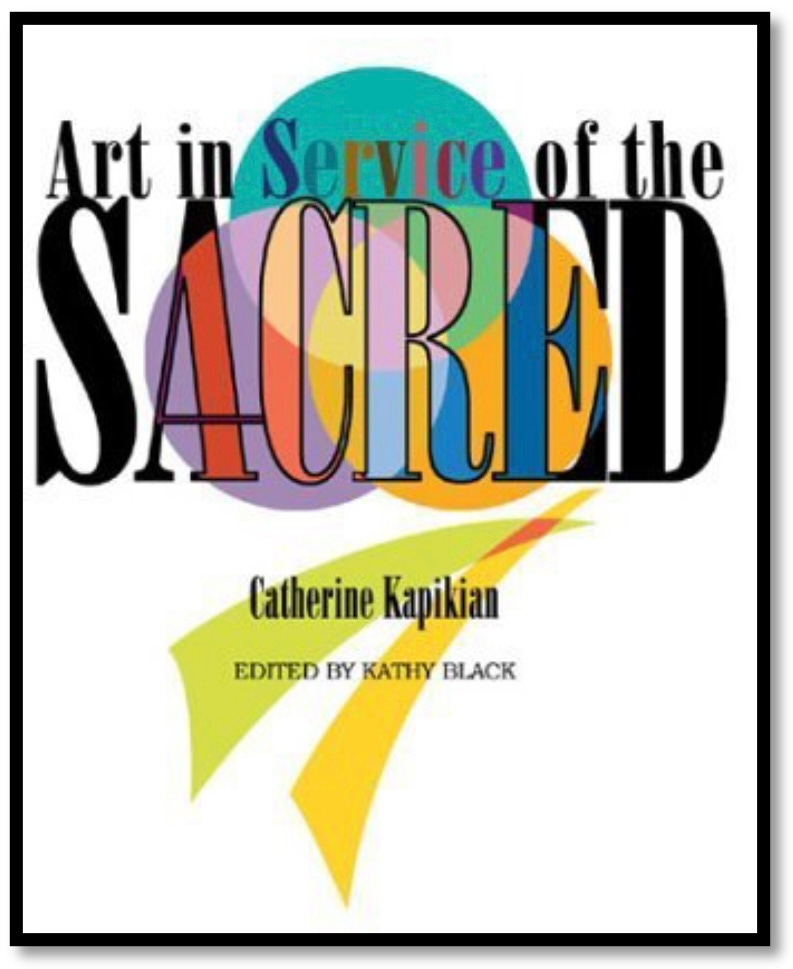
Back in 2006, I started a Doctor of Ministry degree in the Arts and Theology at Wesley Theological Seminary in Washington, DC. (Click here for program info, now known as Curating Community through the Arts.) The main professor and director of what is now the Henry C. Luce III Center for the Arts and Religion was Catherine Kapikian, who still serves as a Director Emertus. It was Cathy who first introduced me to the idea of community art-making. In her landmark book, Art in Service of the Sacred: Symbol and Design for Worship Spaces, Cathy outlined a process for involving entire church congregations in creating needlepoint artwork for their houses of worship. Some of the works were traditional pieces, like kneelers for the communion rail, but others were hung artwork. All were designed with input from each congregation at the design stage, and each encouraged all members, no matter age or skill level, to participate in the creation of the piece. In some cases, congregants sewed only one stitch, but their handiwork was an important part of the process. The idea was to help congregants see that they could participate in the sacred and co-create with the holy.
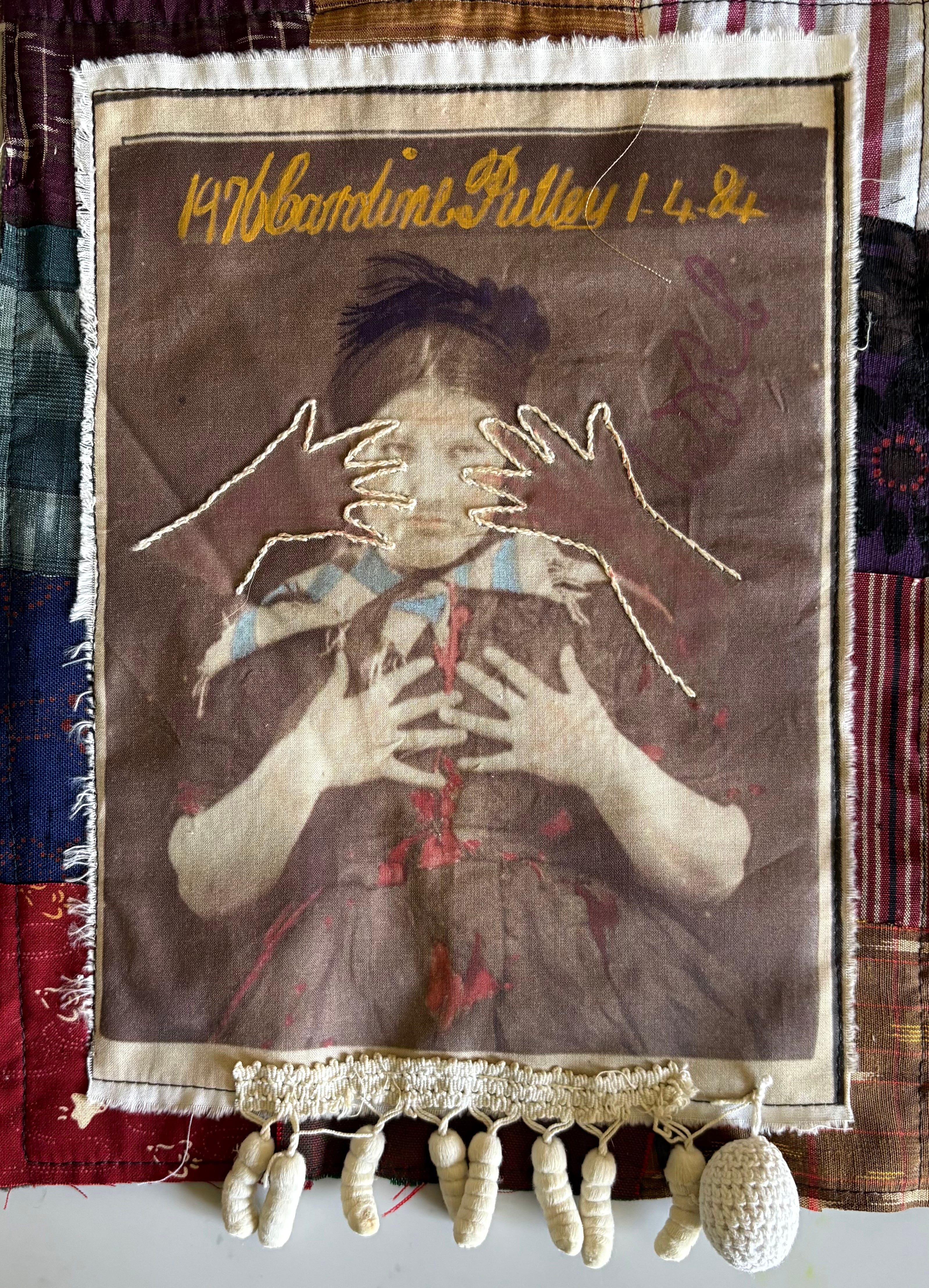
As time goes by, I have become more aware of community stitching projects. Some time ago, I participated in a workshop with textile artist Ruth Singer entitled Criminal Quilts. From Ruth’s website we read: “Criminal Quilts is an art & heritage project inspired by photographs and documents relating to women held in Stafford Prison [Staffordshire, England] 1877-1916.” For the workshop, each participant was given a photo on fabric of one of the women prisoners and encouraged to stitch and embellish the photo as desired. Through participating in the workshop, I learned a lot about why women were imprisoned in those days - usually for stealing food to keep from starving. Here is the woman I was assigned, prisoner 1976, Caroline Pulley, incarcerated in 1884. Prisoners were photographed showing their hands so that any marks, tattoos, or missing fingers could be used for identification. I placed the outline of Caroline’s hands over her face to illustrate how she and her plight were unseen from society.
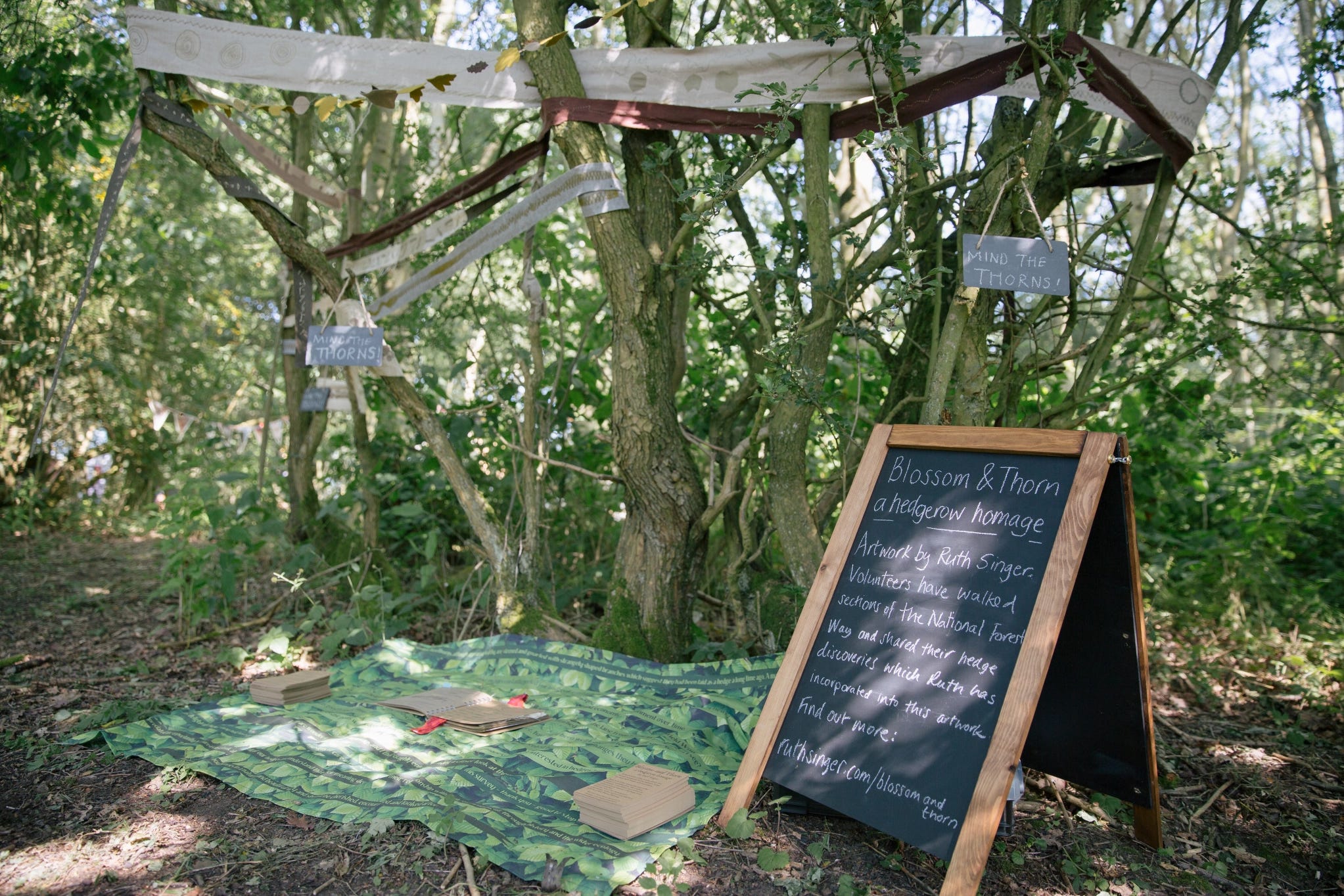
Ruth is still doing community projects, and you can read more about them on her website. Her Blossom & Thorn project is an homage to the hedgerows in England’s National Forest. This is an intricate project; I encourage you to read about the details here. One result from the project was textile artwork Ruth made which was on display in an ancient hedge during an event called Timber Festival in July 2023 (photo below).
Claire Wellesley-Smith, whose books (photos below) are credited with sparking the current Slow Stitching trend, is also involved in community stitching. Her doctoral research project is entitled Crafting Resilience: Cultural heritage and community engagement in post-industrial textile communities (2022) which seems like something that could well be studied here in my native South. Claire’s website is less detailed than Ruth’s, but you can still see a bit more about her projects by going here.


In an earlier post, I mentioned The Millenium Embroidery at Sunbury-On-Thames. Nearly 150 people provided embroidered pieces to create an elaborate and beautiful reproduction of their town in celebration of the turn of the century. A new Substack friend, Stephanie at Thresholds to the Otherworld, was so delighted with this idea that she is considering how she might do something similar with her western North Carolina community which was flood-ravaged during Hurricane Helene.
I hope this post encourages some of you to do the same.
Until next time, Melanie