
False Hope

Spoiler Alert!!
This post contains spoiler info from the Season 5 finale of All Creatures Great and Small.
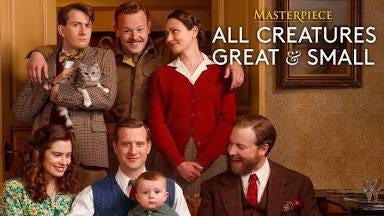
Many of you may already know about the wonderful show on PBS’s Masterpiece, All Creatures Great and Small. Here on the East Coast USA, it typically runs at 9 pm on Sunday nights. The seasons are short, usually six shows plus the Christmas special finale. The show is based on James Herriot’s adventures as a veterinarian in the 1930’s Yorkshire Dales, stories Herriot captured in several books published in the 1970s.
This past week’s show, the Season 5 finale and Christmas special, was in part about false hope. Mrs. Hall, the family’s housekeeper, receives news that the British navy ship her son Edmund serves on has been bombed by the Japanese. The family is bereft . . . all except for good-natured, happy-go-lucky Tristan, that is. Tristan insists that since it’s known that approximately 50% of the crew was rescued, there’s an excellent chance that Edmund made it out alive. Big brother Siegfried, the patriarch of the family, counsels Tristan to stop giving Mrs. Hall false hope. He and Tristan go back and forth about which is better for Mrs. Hall, to accept Edmund’s loss as a fait accompli or to hold out hope until the outcome is sure.
Meanwhile, Mrs. Hall, having received a letter from Edmund that he mailed shortly before his ship was sunk, follows Edmund’s request to deliver a Christmas gift to one of his shipmates who is back home recovering from an injury. Mrs. Hall asks the friend to tell her honestly if Edmund could have survived if he was at his station in the depths of the ship when it was hit. The friend replies that if Edmund was at his station, survival wouldn’t have been possible. At this point, Mrs. Hall loses all hope and prepares for the worst.
On Christmas Day, Mrs. Hall receives a phone call that she doesn’t want to take, sure that the caller will bring news of her son’s death. When she finally answers, it is Edmund himself calling to report that he was rescued and that while injured, he is in hospital recovering nicely. Anna Madeley, who portrays Mrs. Hall, gives an outstanding performance showing just how each of us might feel with the relief of good news after days of assuming the worst.
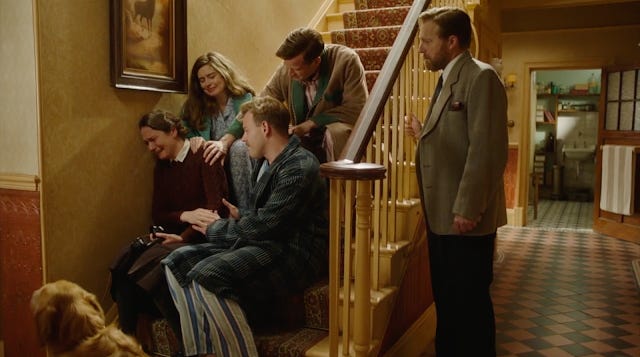
Siegfried and Tristan go to the parlor to make drinks for everyone for a Happy Christmas toast, and Siegfried tells Tristan that he was wrong to try and stop him from being hopeful, that maybe hopefulness was the right thing to hold on to. But Tristan, having received notice the previous day that the soldiers he’d been training had been shipped out, admits that he thinks Siegfried was right all along. “I never really stopped to think what I was training those men for,” says Tristan.
The Cambridge Dictionary defines false hope as “having confidence in an outcome that is unlikely to happen.” As I scrolled through the internet, I found that doctors, psychiatrists, psychologists, and therapists disagree about the benefits and/or detriments of false hope. Some believe hope is a good thing because having hope will motivate you to try harder to reach your goals, and pardon my cliche, live your best life. Others believe offering hope is mean-spirited, especially when the outcome is likely to be unfavorable. Hope that is not borne out, they say, can set you back even further than you were when you began.
As someone who was often told she wears rose-colored glasses, I would have to say that realistic expectations can be a good thing. On the other hand, what state would my soul be in if I didn’t have hope?
What do you think? In these perilous times when we are striving (a word I use advisedly because striving seems to be a full-time job these day) to do anything to prevent the real world from crashing in, is it wrong to hope? Is it wrong to believe people are mostly good, that everything will work out all right eventually, that love is all that matters?
I don’t have the answers, but I was truly surprised, when working on a new artwork this week, to have the words, “Sing peace wherever you go,” come into my mind and end up in my art. Is it merely false hope to think that some of us are doing that - singing peace, or is it the purest kind of prayer, the subconscious act of the human spirit that continues undaunted?
Follow-Up on My January 5th Post on Wintering
Around the first of the year, I offered a post on Wintering which included information on Katherine May’s book, Wintering.
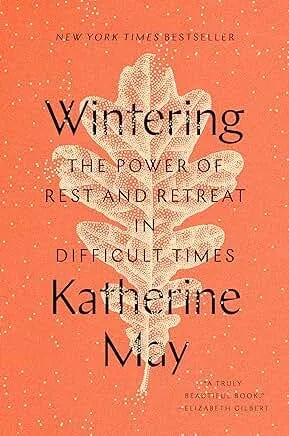
I recently discovered that Katherine is offering a new class, The Way Through Winter.
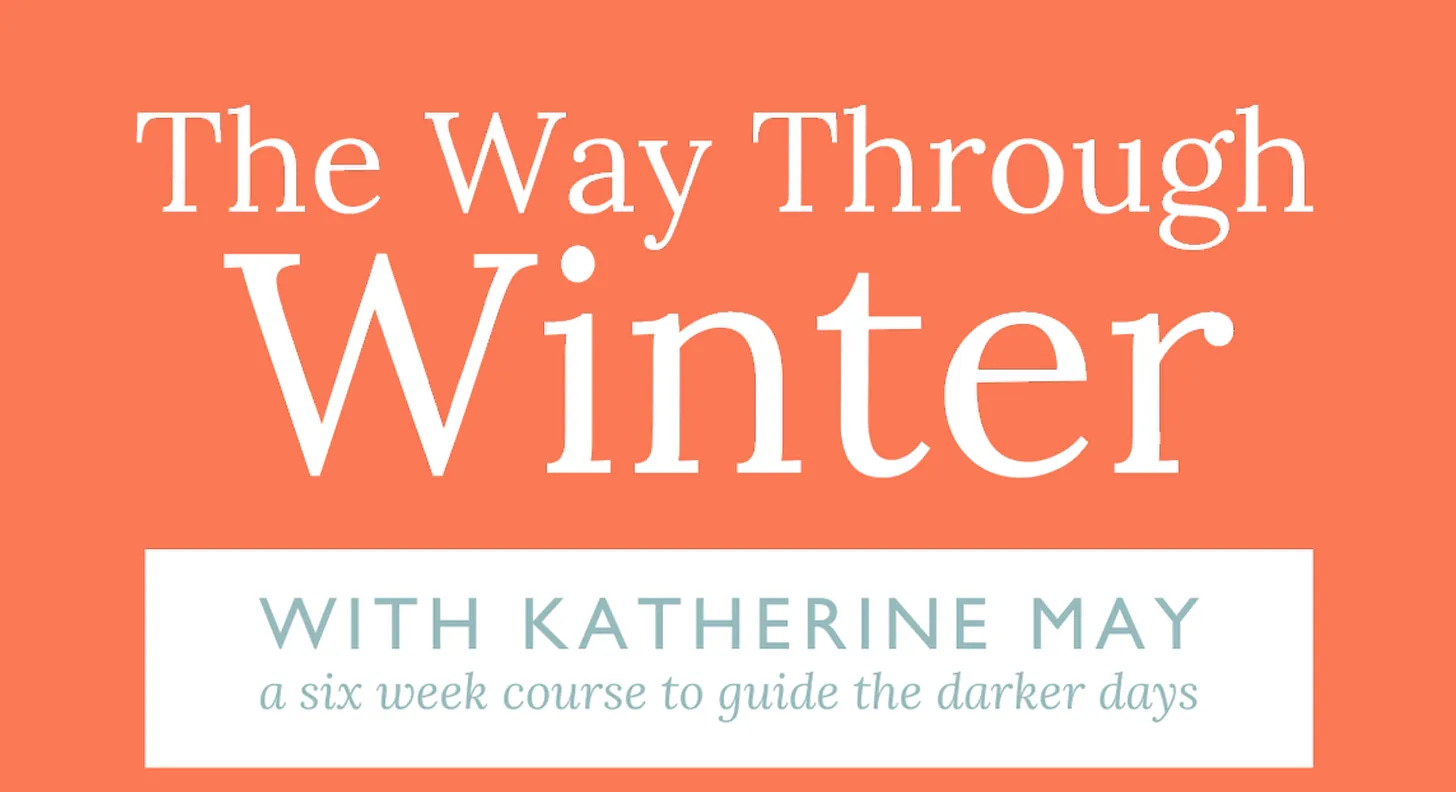
The Way Through Winter runs for six weeks. From Katherine’s website: “All the course materials are exclusive to the course, and build on Katherine’s book, Wintering.” Each week includes:
Exclusive audio recordings, expanding on the central ideas of the book and suggesting new avenues of enquiry.
Specially recorded readings of Wintering.
Guided meditations to help you to rest and reflect.
Journaling prompts and creative exercises to take your exploration deeper.
The best part is there is a Week Zero which is completely free and gives you a chance to experience a whole lesson before you buy the course. Go here to try Week Zero for free. I signed up for the free week and did not have to give a credit card number to access it. Also, I had a hard time finding the cost so wanted to share with you that the course is approximately $175 USD.
Please note: I do not receive any compensation for telling you about Katherine’s course.
“Winter is not the death of the life cycle, but its crucible.
Until next time!