
A Writer’s Life - Part 3
Lindzeanne

I’ve been writing about writing these last couple of weeks, and I’d like to share with you a beautiful and provocative piece of writing on the artistic process by textile artist Lindzeanne. Lindzeanne said she hesitated about posting this piece because she doesn’t consider herself a good writer, yet this piece and its message rang true with me and many others as I’m sure it will for you.
I have to say that I appreciate good grammar, appropriate punctuation, and other writerly skills as much as anyone might, at the same time realizing I often come up short in these areas. However, the real test of good writing, it seems to me, is how well a writer conveys the thought, makes the point, and provides a way for readers to connect with what’s being said.
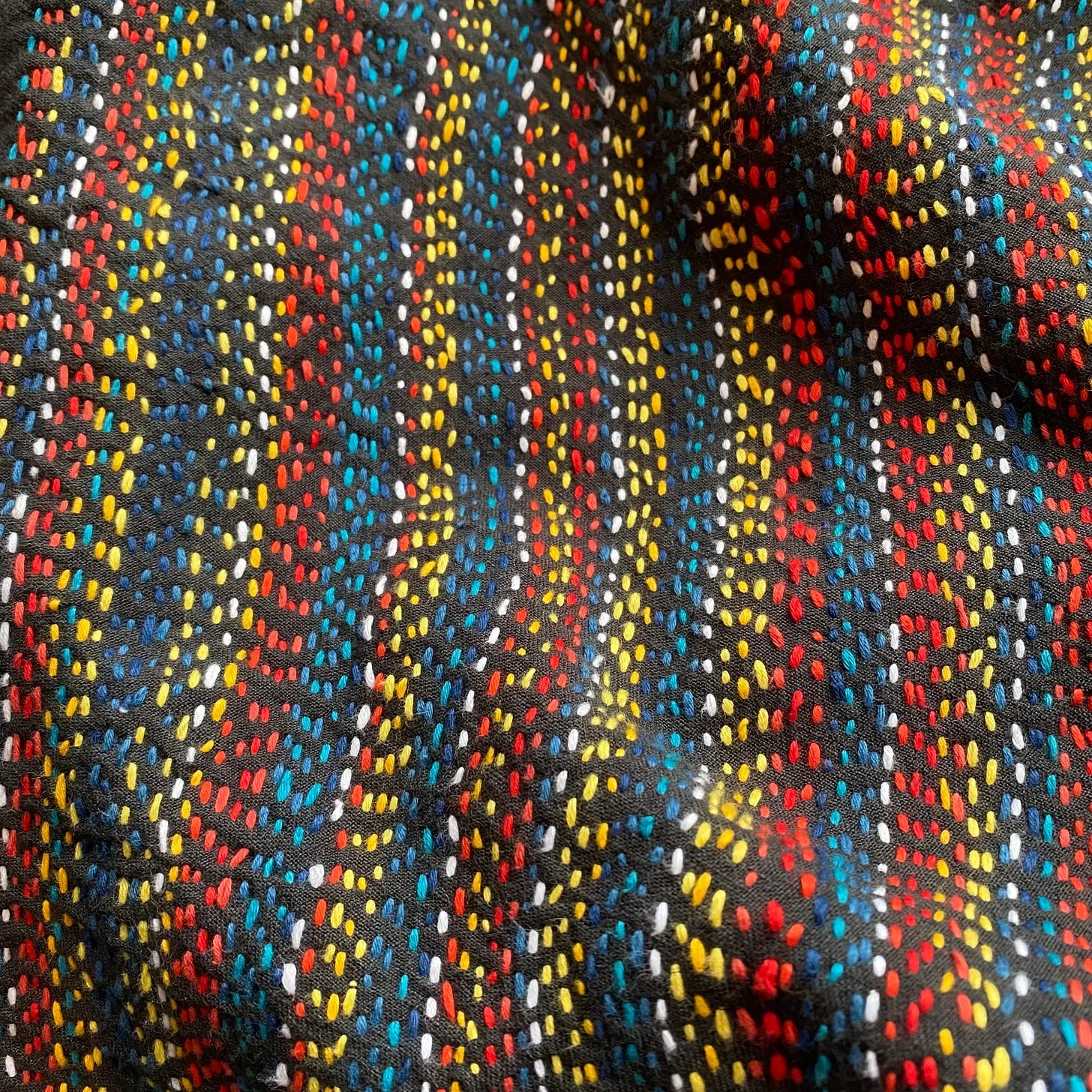
Lindzeanne accomplishes all of that with her piece, “A New Layer,” which I’ve included below. The textile piece at the beginning and the one at the end of her article are hers.
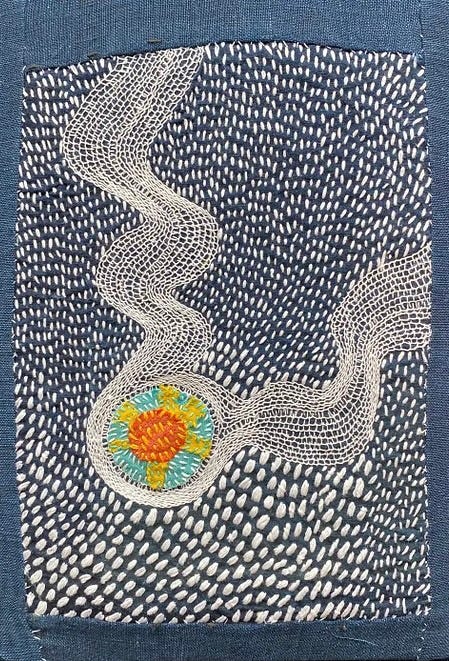
A New Layer
I’ve been thinking about how easily stitch gets collapsed into “craft,” and what gets lost in that translation.
There’s a way the word flattens things. It suggests utility, or tradition, or the acquisition of skill. It points toward what something is - a technique, a method, a material - rather than what it does, or what it holds.
But when I work, I’m not thinking about craft. I’m thinking about marks.
Each stitch is a mark - a small, deliberate gesture that accumulates into something larger than itself. It’s no different, structurally, from a line drawn in graphite or a stroke of paint repeated across a canvas. The needle moves through cloth the way a pen moves across paper: tracing thought, mapping time, building a field of attention one unit at a time.
This reframing changes everything. It shifts the emphasis from the material to the act, from what I’m using to what I’m doing. Stitch stops being about thread and starts being about duration. About return. About the slow compounding of gesture into meaning.
I came to this understanding gradually. For a long time, I worked within the language I’d inherited - talked about textiles, about cloth, about the particular qualities of fiber. And those things mattered. They still matter. But they were never the point.
The point was always the accumulation. The sustained attention. The way a single mark means almost nothing, but ten thousand marks become a terrain.
Mark-making is an old idea, but it’s usually associated with drawing or painting - practices where the hand leaves a visible trace on a surface in real time. Textiles complicate this. The mark doesn’t just sit on the surface; it moves through it, binds it, restructures it. The cloth becomes both ground and record. The thread is both tool and evidence.
But the logic is the same. Whether it’s paint or thread, the work is built from repetition and variation within constraint. A vocabulary of limited moves, deployed across time until something emerges that couldn’t have been predicted at the start.
This is what gets lost when the work is read as craft: the understanding that it’s not about stitch. It’s not about mastery of technique or preservation of tradition or the intrinsic beauty of handmade things - though all of those might be present.
It’s about what happens when you commit to a single, simple action and repeat it until it becomes a form of thinking. Until the hand and the mind are indistinguishable. Until time itself becomes visible.
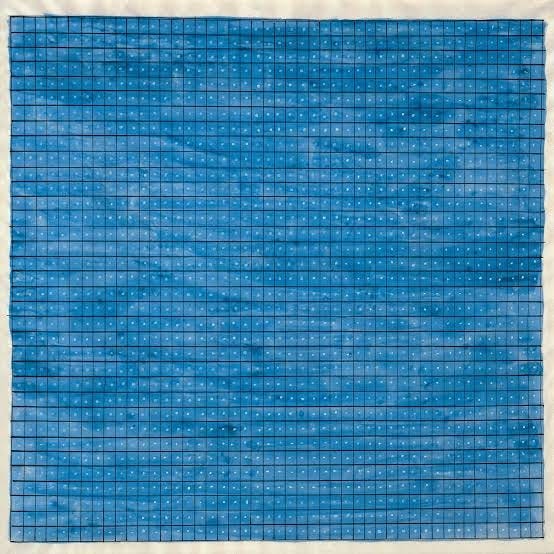
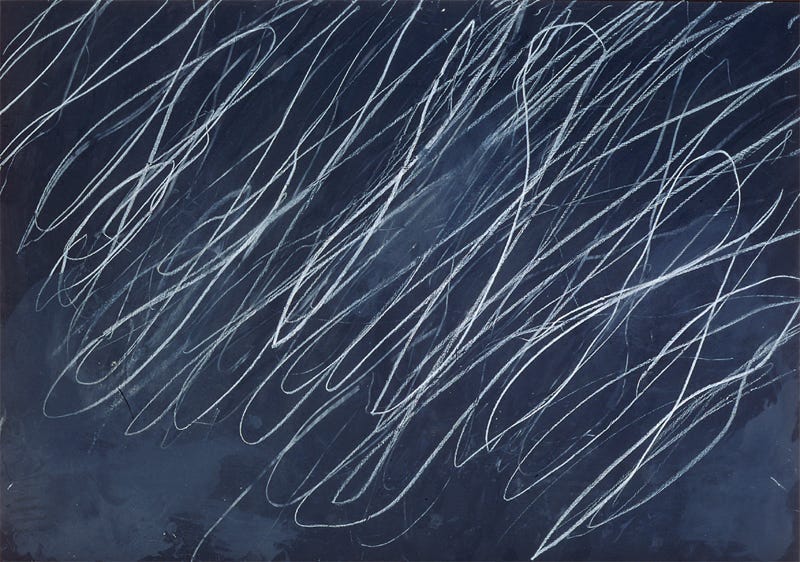
I’ve started looking at my work alongside practices that have nothing to do with textiles.
Agnes Martin’s grids
Cy Twombly and his gestural accumulated thought
And Roman Opalka and his numbered path to infinity
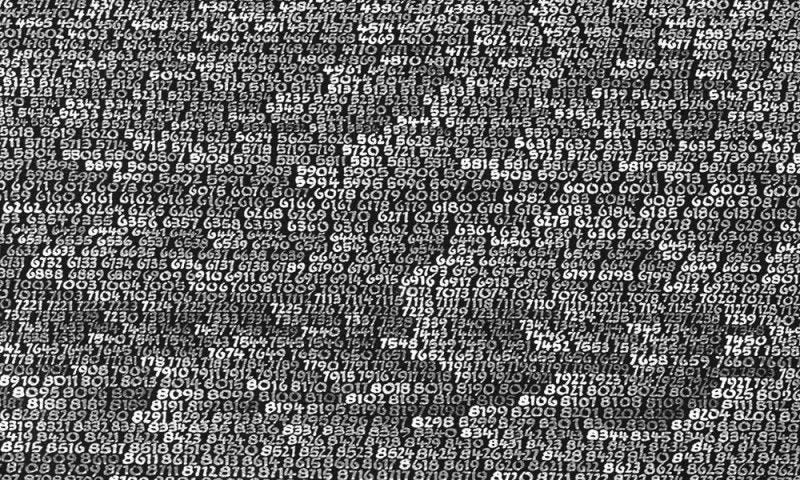
These are artists who understood that repetition isn’t about decoration - it’s about building a structure for attention. A way of staying present across duration.
Their marks are not my marks. But the question is the same: What does it mean to return, again and again, to the same gesture? What becomes visible in that return?
When I describe my work now, I talk about durational mark-making. About fields of accumulated gesture. About attention rendered visible.
And this is not me saying I’ve abandoned textiles, but because “textiles” has offered me a roomy enough vocabulary to describe what I have actually been doing.
The material matters - of course it does. Cloth has memory. Thread has tension. The needle has weight. But these are the conditions of the work, not its subject.
The subject is time. Attention. The quiet architecture of staying.
And that’s not craft. That’s something else entirely.
It’s a mark that holds duration. A thread that maps thought. An accumulation slow enough to resist everything that asks us to move faster.
This is the work I’m making. And this is how I’m learning to see it.
My Thoughts
I enjoy slow stitching1 for relaxation which I consider craft. Occasionally I do pieces I consider to be art. Intuitively, I feel there’s a difference, and I’ve been working on how to explain it. Lindzeanne’s article has helped me think more deeply about that.
I asked this question of one of my teachers who told me a piece is art when it is expressive. I asked her to define expressive, and she said it was how you move your arm when stitching. When I read what Lindzeanne wrote about mark-making, I understood it’s how those expressive stitches develop into something more that is the real key to understanding. I can move my arm expressively when slow stitching, but that only makes for a tired arm and doesn’t turn craft into art. But if those expressive movements become mark-making with a driving force behind them that’s moving toward something more, then it becomes art. Gesture, as Lindzeanne says, turns into meaning.
Another teacher helped me to see that my art is generally metaphorical, that it to say it has a story behind it that evokes meaning. To me, when my stitches move toward something more and when meaning is present, therein lies the “art” of it rather than the craft.
It’s important to note, however, that I don’t believe art is more important than craft or vice versa. In fact, the lines are often blurry. Many people show me their craft, and I see art. Likewise, some pieces identified as art seem more like craft to me. I guess that explains why I’ve always liked the term artisan. According to several sources, an artisan is a skilled craftsperson who creates objects by hand, often using traditional methods. That comes more closely to what I think I do, who I think I am, and why I’m creating.
How about you?
Until next time! Melanie
What is slow stitching? Slow stitching is the meditative practice of moving a needle and thread through fabric with no intention or plan. Slow stitching prioritizes creativity over perfection, and often slow stitchers will ignore “errors” or simply stitch over them. The purpose of slow stitching is to quiet the mind by engaging the hands in rhythmic stitching.